
Because real artistry deserves real hygiene.
Sterilization is a routine procedure in every field that involves incisions or contact with human tissue — from surgery to micro-aesthetics. Among the many sterilization methods available, autoclaving remains the most trusted and effective. While autoclaves are best known for their role in medical and dental fields, they are equally vital in the tattoo and body piercing industry, where safety and skin integrity come first.
Why Tattoo and Piercing Studios Rely on Autoclaves
The tattoo and piercing industry has grown rapidly — and so have clients’ expectations for safety and professionalism. Today’s clients aren’t just looking for stunning designs; they want assurance that every tool touching their skin is 100% sterile. A reputable studio isn’t defined by décor or popularity — it’s defined by visible hygiene practices.
Before getting a tattoo or piercing, every client should be able to ask:
- Is the studio visibly clean and organized?
- What are the sterilization procedures used?
- Do they use an autoclave for reusable tools?
- How are single-use items handled?
- Are sterile, sealed needles used for every client?
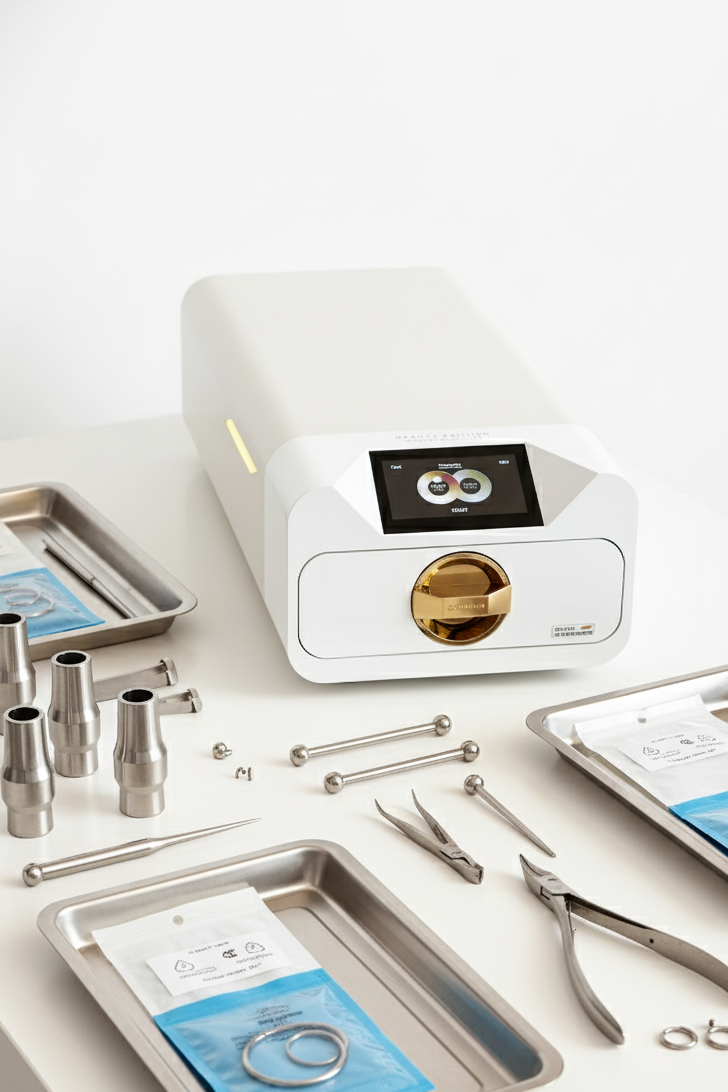
Autoclaves and Piercing Equipment
Not every instrument in a tattoo or piercing studio can be autoclaved — but the majority should be.
Understanding which tools can safely go through an autoclave and which cannot is essential for maintaining proper hygiene standards.
Autoclavable materials:
– Metals (stainless steel, titanium)
– Glass instruments
– Select medical-grade acrylics like Bioplast, PMMA, PTFE, and Bioflex
⚠️ Plastic tools and piercing guns — they can melt or deform under high heat, and their internal parts can’t be sterilized properly. Always use sterile, single-use needles instead.
⚠️ Rubber or silicone parts — these materials can warp, trap residue, or release chemicals inside the autoclave.
⚠️ Non–heat-resistant jewelry — acrylic, wood, or plastic jewelry can crack, absorb moisture, or harbor bacteria; only metal jewelry (like titanium or steel) should be autoclaved.
Why Autoclaving Is Superior to Other Methods
Many so-called “sterilization” practices used in smaller studios don’t meet professional standards:
❌ Flame sterilization — unreliable and damages instruments.
❌ Boiling water — kills some bacteria but not resistant spores.
❌ Rubbing alcohol or UV light — disinfects surfaces but doesn’t sterilize.
❌ Chemical sterilization — slow, inconsistent, and unsafe for all materials.
✅ Steam autoclaving — the only method that eliminates all forms of microbial life, including spores, using pressurized steam at 121–134°C.
The Benefits of Proper Autoclaving
Prevents Infections
Tattooing and piercing create small open wounds. Without sterile tools, these can become entry points for bacteria and viruses, causing impetigo, staph infections, or viral warts.
Prevents Serious Diseases
Autoclaving eliminates pathogens responsible for Hepatitis B, Hepatitis C, and HIV — infections that can be life-threatening and permanently damage the reputation of a studio.
Extends Equipment Lifespan
Reusable instruments like tattoo grips or microblading handles can last significantly longer when cleaned and autoclaved correctly — saving costs while maintaining hygiene integrity.
Single-Use vs. Reusable: What You Should Know
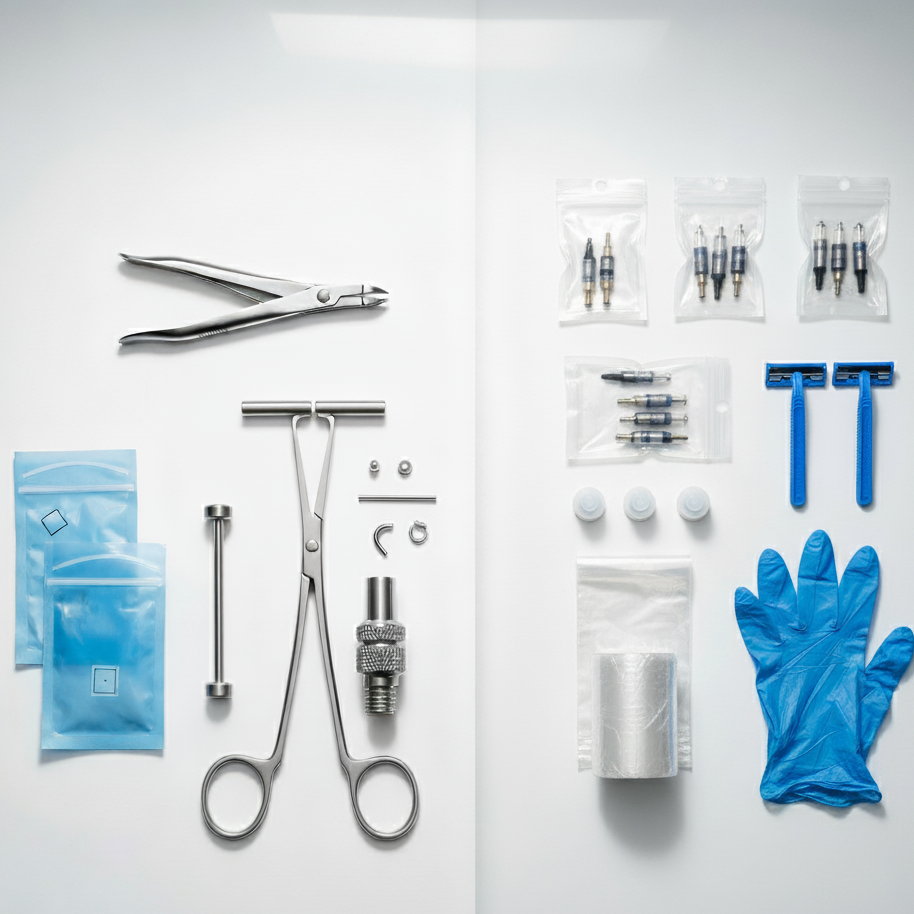
Single-use / pre-sterilized items (open in front of the client):
- Needles and cartridges
- Ink caps, razors, barrier films, gloves
- Certain piercing jewelry sold in sealed sterile packs
Reusable items that must be autoclaved between clients:
- Forceps, clamps, and hemostats
- Tattoo grips, stainless-steel tips, and tubes
- Metal receiving tubes and pliers
- Reusable jewelry or tapers
Autoclaving: The Visible Standard of Professionalism
Autoclaving doesn’t just protect your clients — it protects your reputation.
When clients see you open sealed, sterilized pouches or spot your autoclave on display, they instantly feel safe. That trust turns into loyalty.
Why Enbio Is the Preferred Choice for Artists
Enbio autoclaves, trusted across 60+ countries, bring Class B medical-grade sterilization into the world of body art.
- 7-minute cycles for faster tool turnaround
- Compact, elegant design that fits any studio aesthetic
- Hospital-level sterilization made effortless
With Enbio Beauty India, tattoo and piercing professionals can now meet — and exceed — international hygiene standards.
Conclusion — True Art Starts with True Safety
Tattooing and piercing are forms of art. But art, when done on skin, carries a responsibility.
Sterilization isn’t a formality — it’s the foundation of trust, safety, and professionalism.
By choosing autoclaving, you’re not just complying with hygiene standards — you’re protecting your clients, your craft, and your credibility.
In a world full of art, let your studio stand out for safety as well as style.